

AMD Radeon RX 570 review: The best graphics card you can buy under $200, barely changed - mullinsanothe1939
At a Peek
Expert's Evaluation
Pros
- 4GB of Crash
- Superb 1080p gaming operation
- Quiet, cool, and overclocked.
- $10 cheaper than RX 470
Cons
- Refresh of existing RX 470
- Lags behind Nvidia GPUs in power efficiency.
Our Verdict
The Gigabyte Aorus is a gorgeous, well-performing graphics card. The Radeon RX 570 is the prizewinning sub-$200 gaming option around—but it isn't much of a escalate over the RX 470.
Best Prices Today

$159.99
Meet the new sub-$200 graphics placard boss, very as the old sub-$200 graphics card gaffer.
AMD's parvenu Radeon RX 500-series graphics cards are here, and they're most notable for what they're aren't. The Radeon RX 500 lineup doesn't include the hotly hoped-for Vega GPUs, nor are they really new at all. Instead, the Radeon RX 500 series utilizes a second-generation Polaris architecture compared to the original RX 400 cards (the RX 470, in this case). Yep, the $180 Radeon RX 570 is a refresh, non a entirely new GPU architecture.
That's not necessarily a bad thing. The graphics card market is in a a good deal different place directly than it was when the Radeon RX 470 launched. You can actually buy the things, for one—the RX 470 and RX 480 were understocked (and therefore, overpriced) for months. At present that AMD's Ryzen processors are finally here, multitude are thinking more or less upgrading. A refreshed Radeon lineup with a year's worth of optimizations makes sense. Simply does information technology makes common sense for you to corrupt a Radeon RX 570?
That's what we're here to find out.
Meet AMD's Radeon RX 570
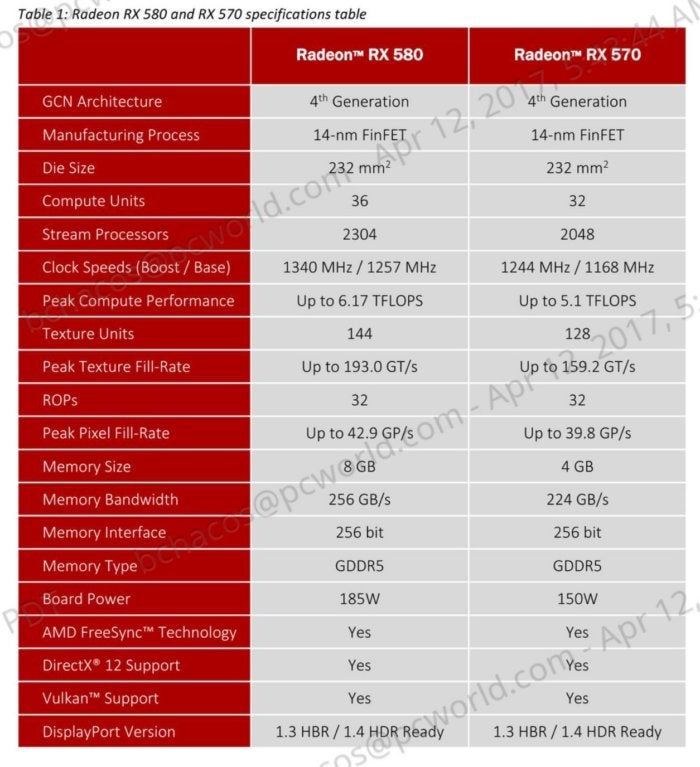
Here's a looking at the technical specs for the Radeon RX 570 and RX 580 (we reviewed Lazuline's take on the latter). Little has changed from their predecessors. The Radeon RX 570 still has the same inexplicit GPU aim, the same memory speeds, the same add up of texture units, and—despite the graph below, which lists only one capacity—the selfsame 4GB and 8GB memory options as the RX 470. It's $10 cheaper this generation, though, which greatly improves its value proposition compared to the $200, 4GB RX 580.
 AMD
AMD Under the punk, the Radeon RX 570 sees very slight increases to its memory bandwidth, extremum texture fill-grade, and peak compute execution, but the real guide here is the clock speeds. The original Polar star cards were pushed to the edge of their capabilities and didn't have much overclocking headway. Those manufacturing process optimizations let AMD crackpot Polaris's time speeds higher. Whereas the RX 470 ranged from a mere 926MHz base of operations time to a 1,206MHz boost time, the new Radeon RX 570 rocks 1,168MHz base and 1,244MHz promote clocks. That's non much of an increase on the high end simply it's a noticeable increase to service line speeds, and AMD's partners can crank things even boost with manufactory overclocks.
Those higher speeds put on't come magically; the Radeon RX 570 demands Sir Thomas More powerfulness despite the optimized manufacturing outgrowth, with a 150-watt TDP compared to the RX 470's 120W.
 AMD
AMD Radeon Chill on ice.
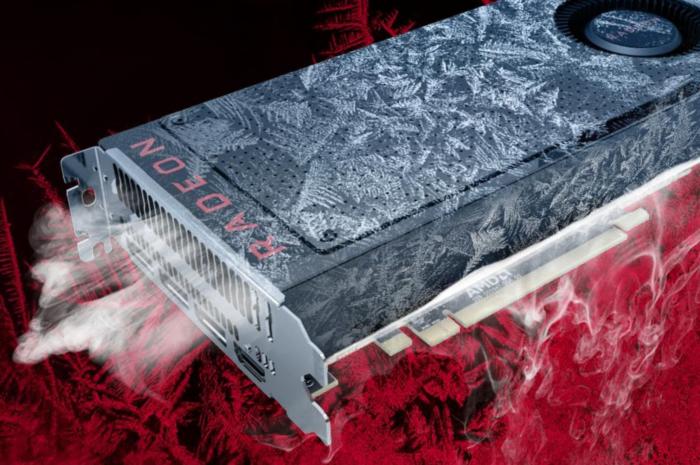
AMD combats that with any software tricks, however. The RX 500 serial adds a untested power province that reduces energy demands when you're idle, using a multi-monitor apparatus, Oregon watching media, for exercise. The wonderful Radeon Cool feature article baked into AMD's drivers prat also reduce temperatures and power use by a earthshaking amount in 17 popular PC games. As part of the RX 500 announcement, AMD's also adding Radeon Chill support for Conference of Legends and Dota 2—two of the most-played games on the planet.
There won't be any reference versions of the Radeon RX 570 accessible, only customized card game past AMD's hardware partners. That's similar to how the Radeon R300-serial refresh was handled upcoming from the R200 series. AMD says those custom RX 570 cards testament be easy immediately, however.
 Brad Chacos/IDG
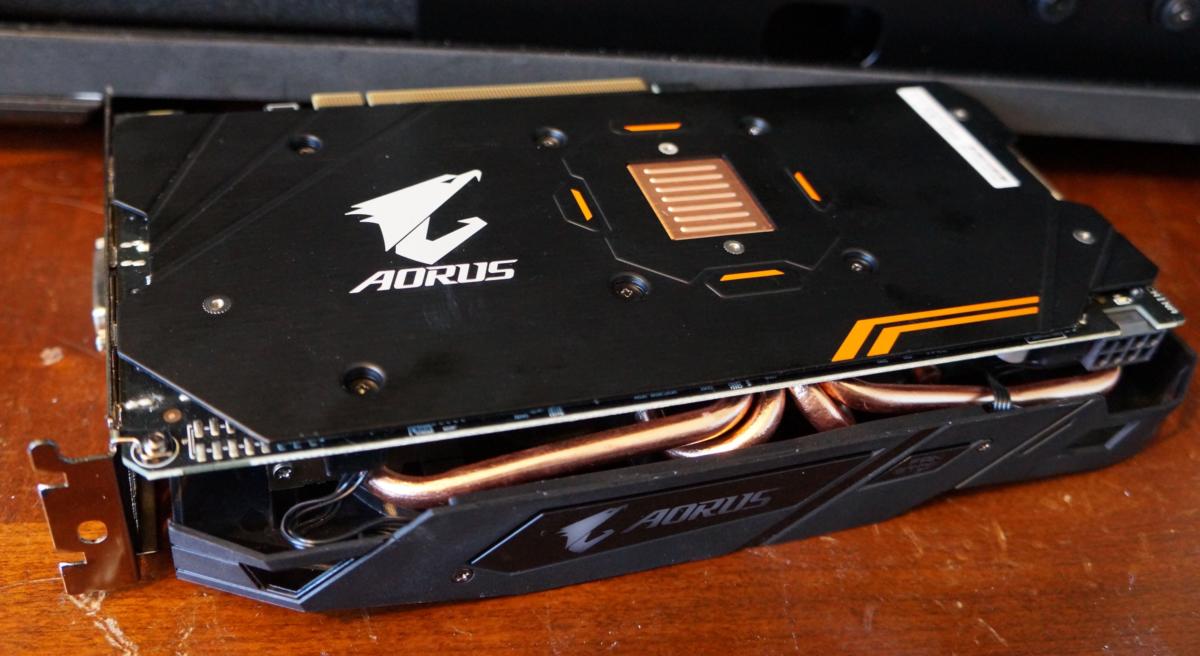
 The Aorus Radeon RX 570.
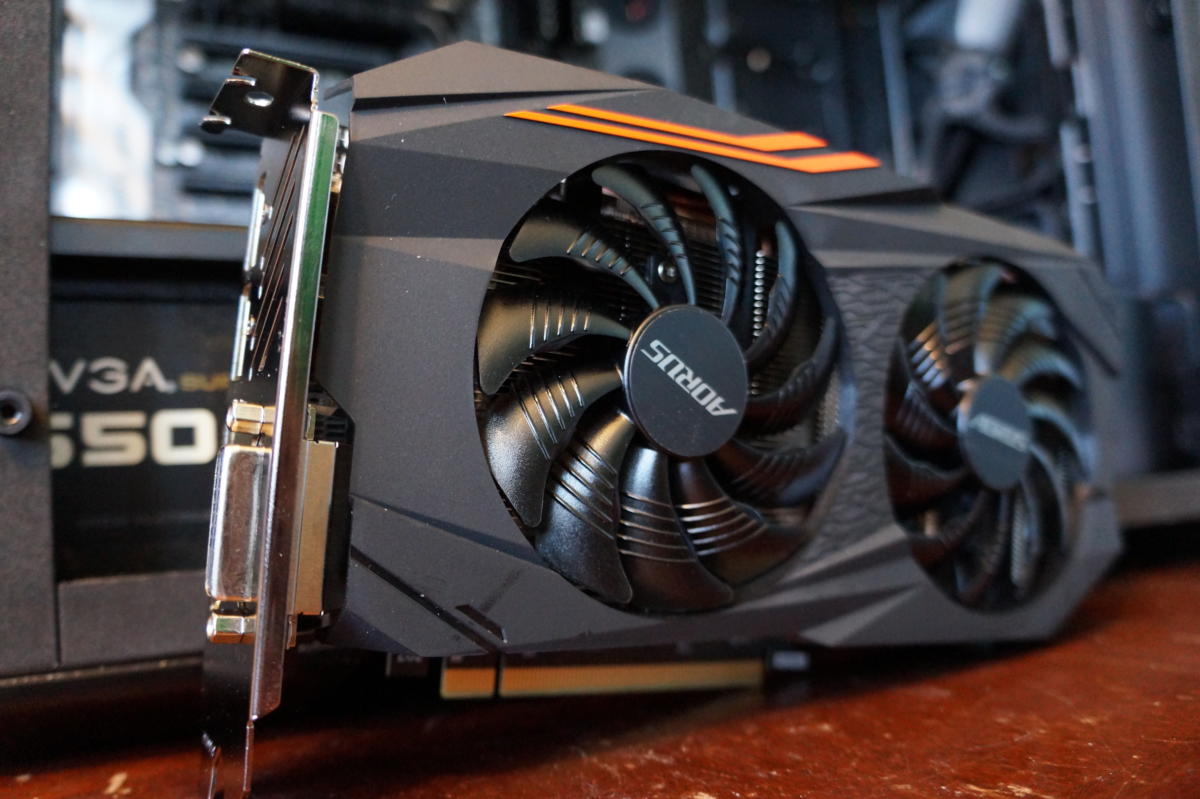
The version we're testing today is G's Aorus Radeon RX 570 ($180 on Newegg), and information technology's a fashionable one and only. The card's equipped with two of Gigabyte's Windforce fans, concluded a decently sized ignite sink imbued with four copper pipes that directly contact the GPU. The Aorus RX 570 also features an RGB Fusion-compatible LED logo emblazoned on its edge, besides as an attractive backplate with "civilised copper backplate temperature reduction." Testing by Linus Tech Tips has shown that the copper square doesn't really keep temperatures down, but hey, it sure as shootin is pretty. This is my first time handling an Aorus graphics card and I actually digging the design.
 Brad Chacos/IDG
 The Aorus Radeon RX 570 comes with a manufactory overclock to 1,280MHz, which works out to 36MHz over the origin RX 470 specification. That's jolly small-scale, simply in-line with the increases you'd discover in many factory-overclocked RX 470 card game. Gigabyte too offers Aorus Nontextual matter Engine software that promises extra indefinite-click overclocking capabilities if you desire to push button things further without manually tinkering with clock speeds. (And if you do smel like non-automatic tinkering, in that respect's always Radeon Wattman baked into AMD's drivers.)
 Brad Chacos/IDG
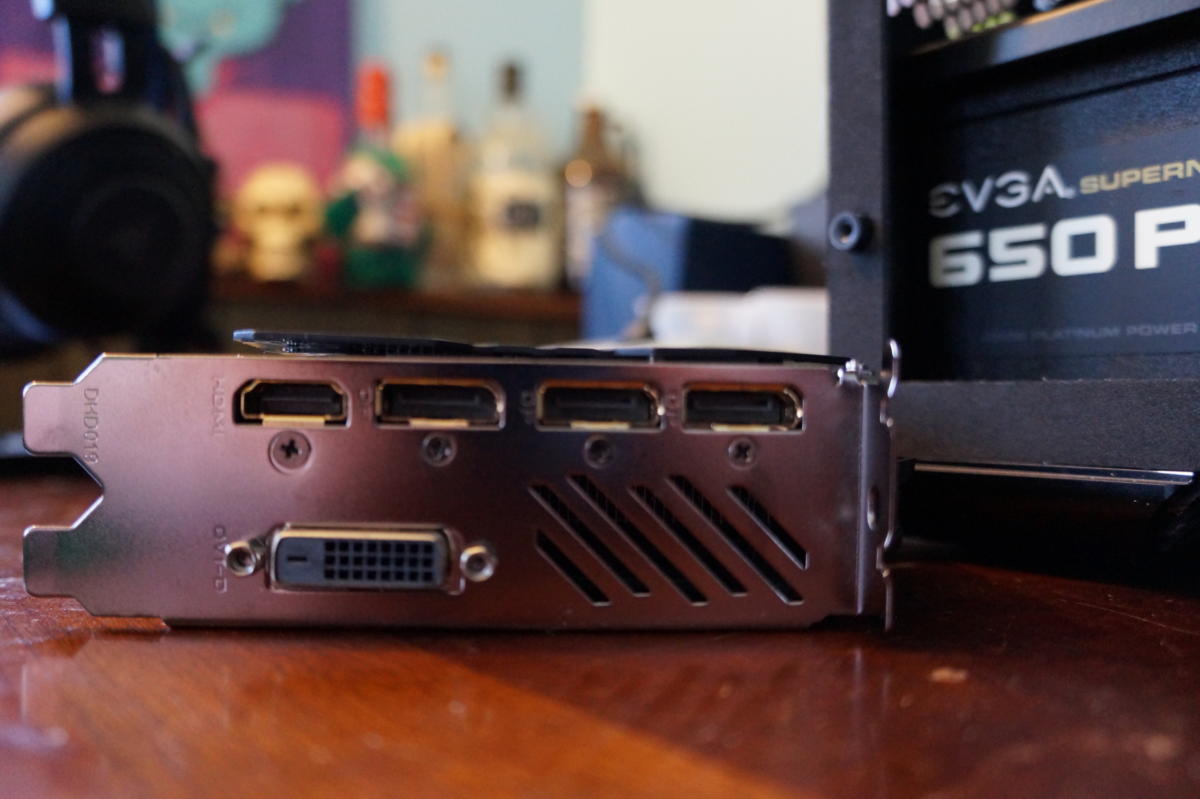
 Port report.
Left-wise, the 9.5-inch-lengthy Aorus Radeon RX 570 offers a trio of DisplayPort 1.4 connections, a single HDMI 2.0 porthole, and DVI-D. It draws power via a single 8-immobilize connection, and Gigabyte recommends a 450W or greater power supply for the lineup.
Plenty blabber. Let's benchmark!
Quiz organisation/Division benchmarks
We well-tried the Aorus Radeon RX 570 on PCWorld's holy graphics calling card benchmark system. Our testbed's loaded with shrilling-final stage components to avoid bottlenecks in other parts of the scheme and show unfettered graphics performance. Key highlights:
- Intel's Marrow i7-5960X with a Corsair Hydro Series H100i closed-loop water cooler ($120 on Amazon).
- An Asus X99 Deluxe motherboard ($230 on Amazon for an updated interlingual rendition).
- Barbary pirate's Retribution LPX DDR4 memory ($130 on Amazon), and 1,200-watt AX1200i power furnish ($310 on Amazon).
- A 480GB Intel 730 series SSD ($280 happening Amazon).
- Phanteks' Enthoo Evolv ATX case ($190 on Amazon).
- Windows 10 Pro ($158 on Amazon).
To try the Radeon RX 570's heart, we're comparing it against its natural competitors: XFX's overclocked Radeon RX 470 Covert Edition True OC and EVGA's version of Nvidia's $200 3GB GeForce GTX 1060, which is not overclocked. We're too including results from Sapphire's newfound Radeon RX 580 Nitro+ to read how the Aorus RX 570 card rafts up against its beefier sibling.
AMD's marketing materials pitted the RX 570 against the elderly R7 370 and GTX 960, playing up the upgrade angle. We'Re not going to bother with that Here. Frankly, the active RX 470 already stomped every last over the R7 370 due to its go out from the older 28nm manufacturing procedure to cutting-edge 14nm GPU technology, and it's non Charles Frederick Worth revisiting present. The Radeon RX 570 is definitely a worthwhile upgrade from that posting. Likewise, the existing RX 470 also crushed Nvidia's budget-focused $140 GeForce GTX 1050 Ti, so we declined to re-consort those tests as well.
Time for the fun stuff.
The Division
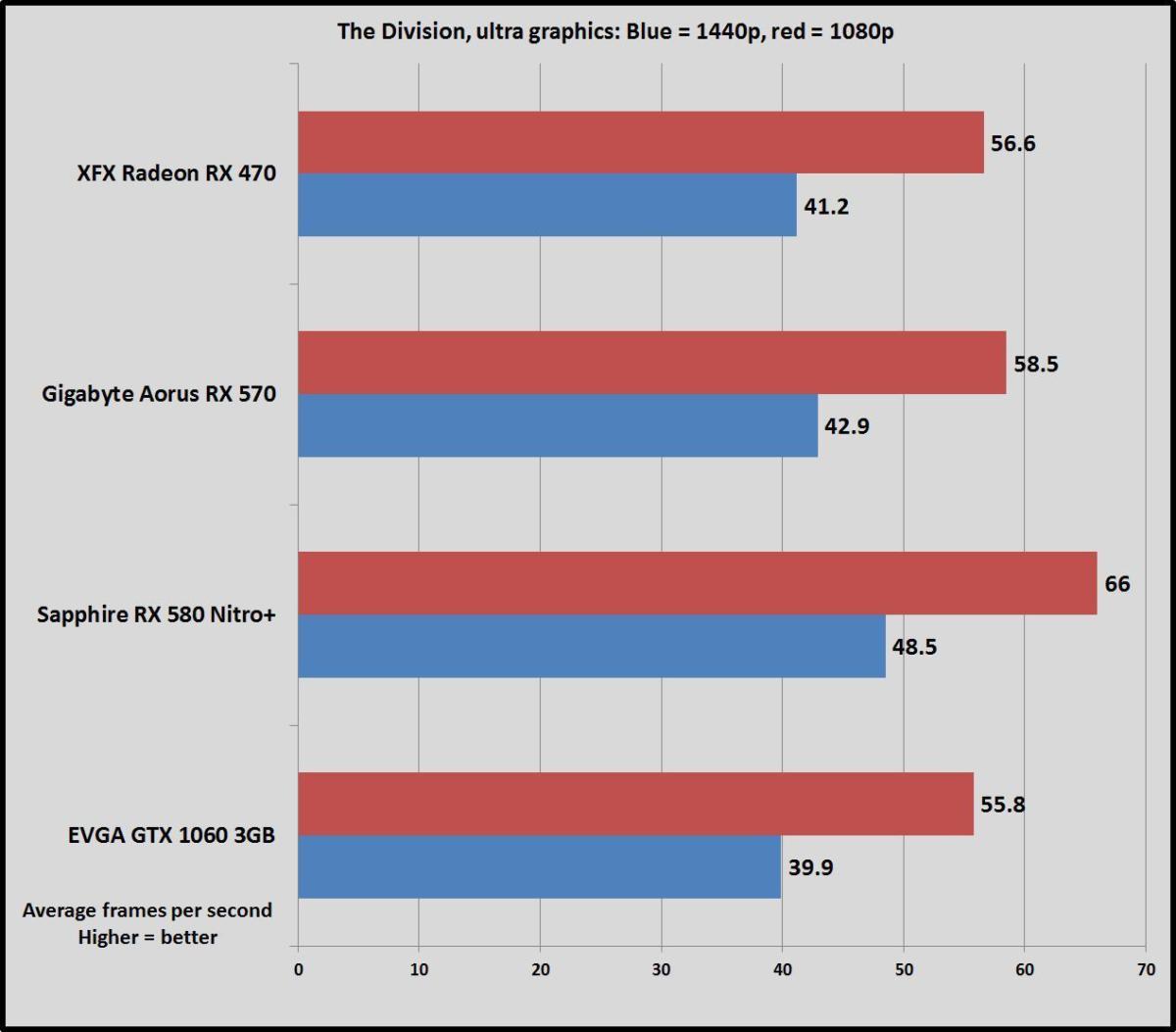
Let's start with The Division, a gorgeous third-person hired gun/RPG that mixes elements ofCircumstancesandGears of War. IT uses Ubisoft's inexperient Snowdrop engine, and we test in DirectX 11 mode, which offers more consistent results.
 Brad Chacos/IDG
 With Ultra settings enabled, the Aorus Radeon RX 570 flirts with the hallowed 60 frames-per-second standard at 1080p resolution, while still turning in a respectable 40 fps-plus rate at 1440p. (Though information technology's not shown Here, turning the graphics down to High near doubles the results.) Information technology's a mere 3.36 pct faster than the overclocked XFX RX 470, which itself is neck-and-neck with the non-overclocked EVGA GTX 1060 3GB. Okay.
The overclocked Sapphire RX 580 Nitro+, in compare, is roughly 13 percent faster.
Hitman
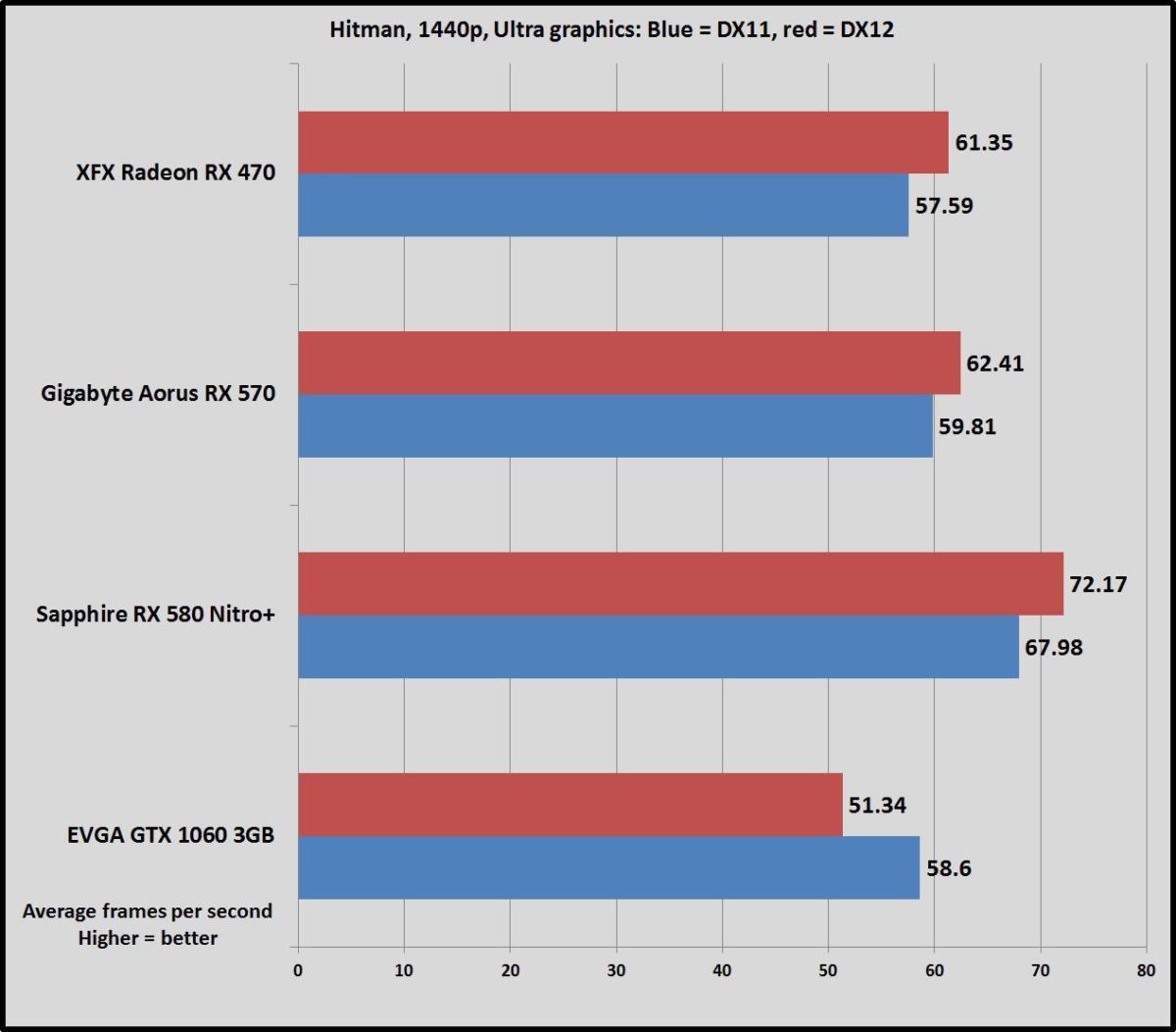
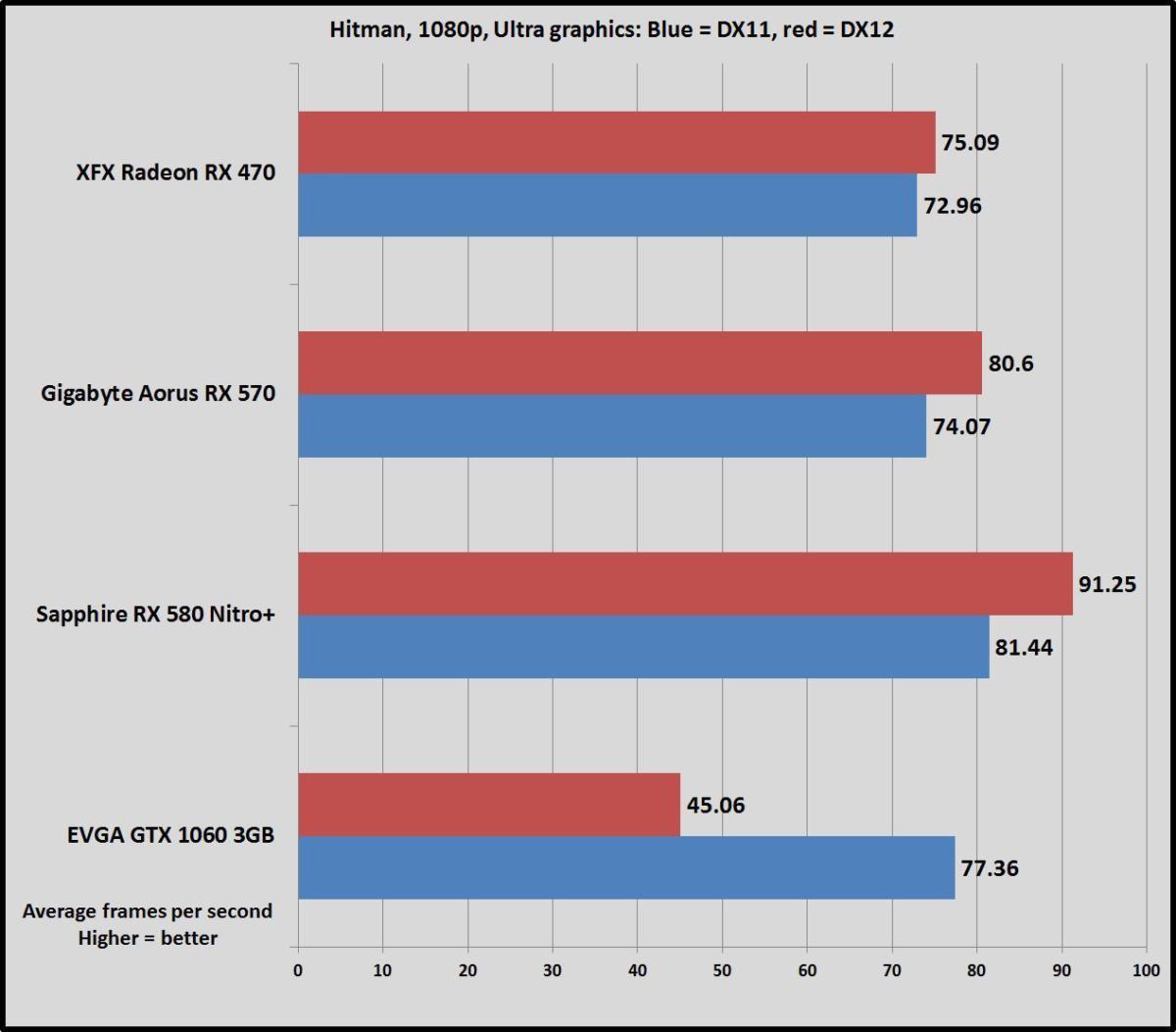
Hitman's Glacier engine traditionally blessed AMD hardware as a flagship AMD Gaming Evolved title, but GeForce card game take over evened the score with device driver updates. We test in some DirectX 11 and DirectX 12, with SSAO injured.
 Brad Chacos/IDG
  Brad Chacos/IDG
 The Radeon RX 570 comes out slightly ahead here when comparing the nonpareil artwork API for each brand (DX11 for Nvidia, DX12 for AMD) merely again, it's awfully close—just 4 frames or so per second. And again, the oomph this refresh provides proves nominal versus the RX 470.
Hitman's very much playable at both 1440p and 1080p with nontextual matter cranked on all cards. Avert DX12 mode on the GTX 1060, though, as the paltry amount of store introduces several nasty stuttering.
Rise of the Tomb Pillager
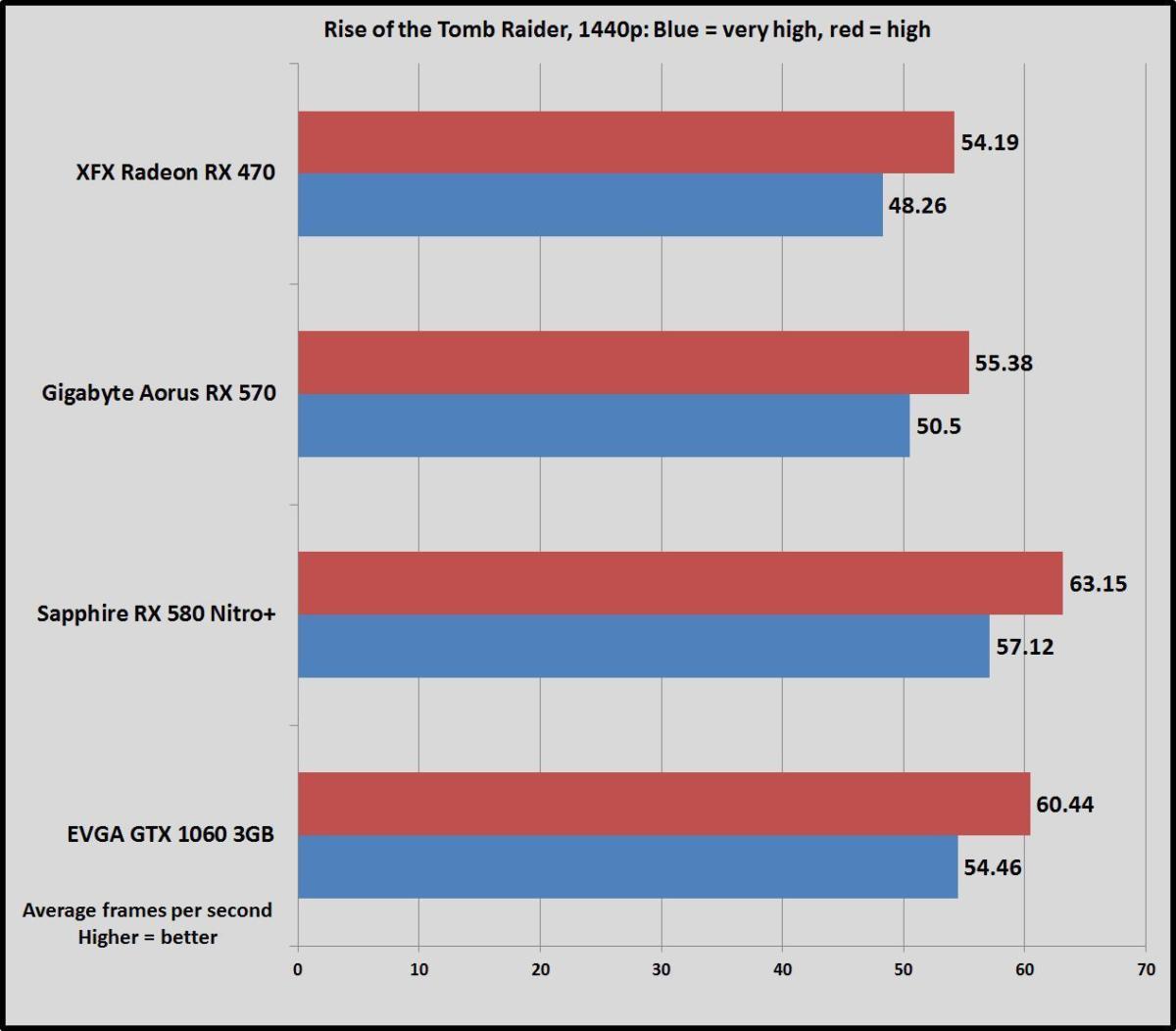
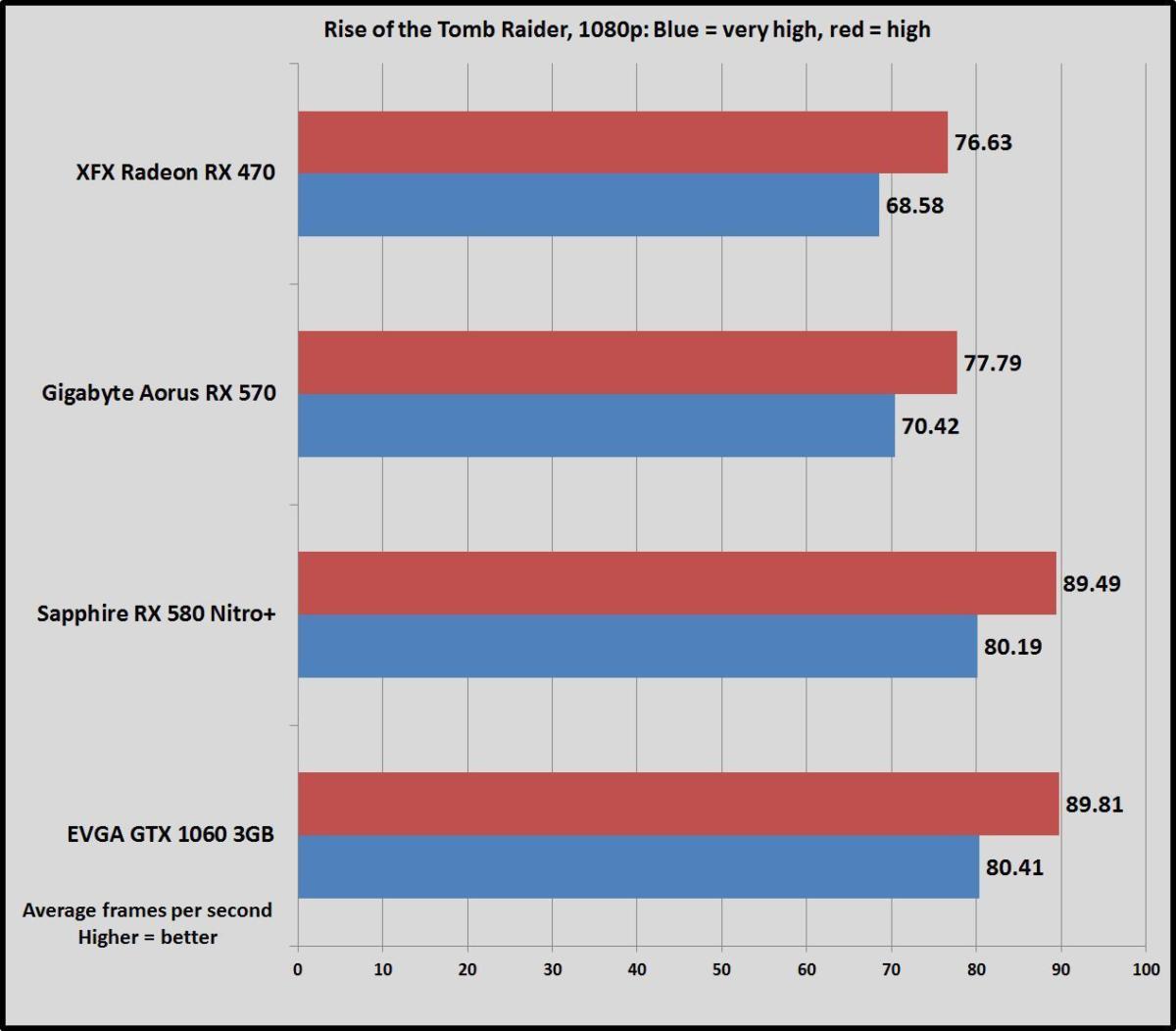
WhereasHitmanadores Radeon GPUs,Rise of the Tomb Raiderperforms much better on GeForce card game. We only test the courageous's DirectX 11 mood. DX12 was bolted on aft the fact and Acts a trifle wonky.
 Brad Chacos/IDG
  Brad Chacos/IDG
 EVGA's 3GB GTX 1060 smokes the Radeon cards here, as is to live expected. The Aorus RX 570 narrows the disruption mightily at 1440p resolution, however—A does the RX 470, as it over again delivers operation the slimmest of hairs behind its successor. The 3GB capacity of Nvidia's $200 graphics card just isn't ideal for high-resolution gaming.
Far Cry Early
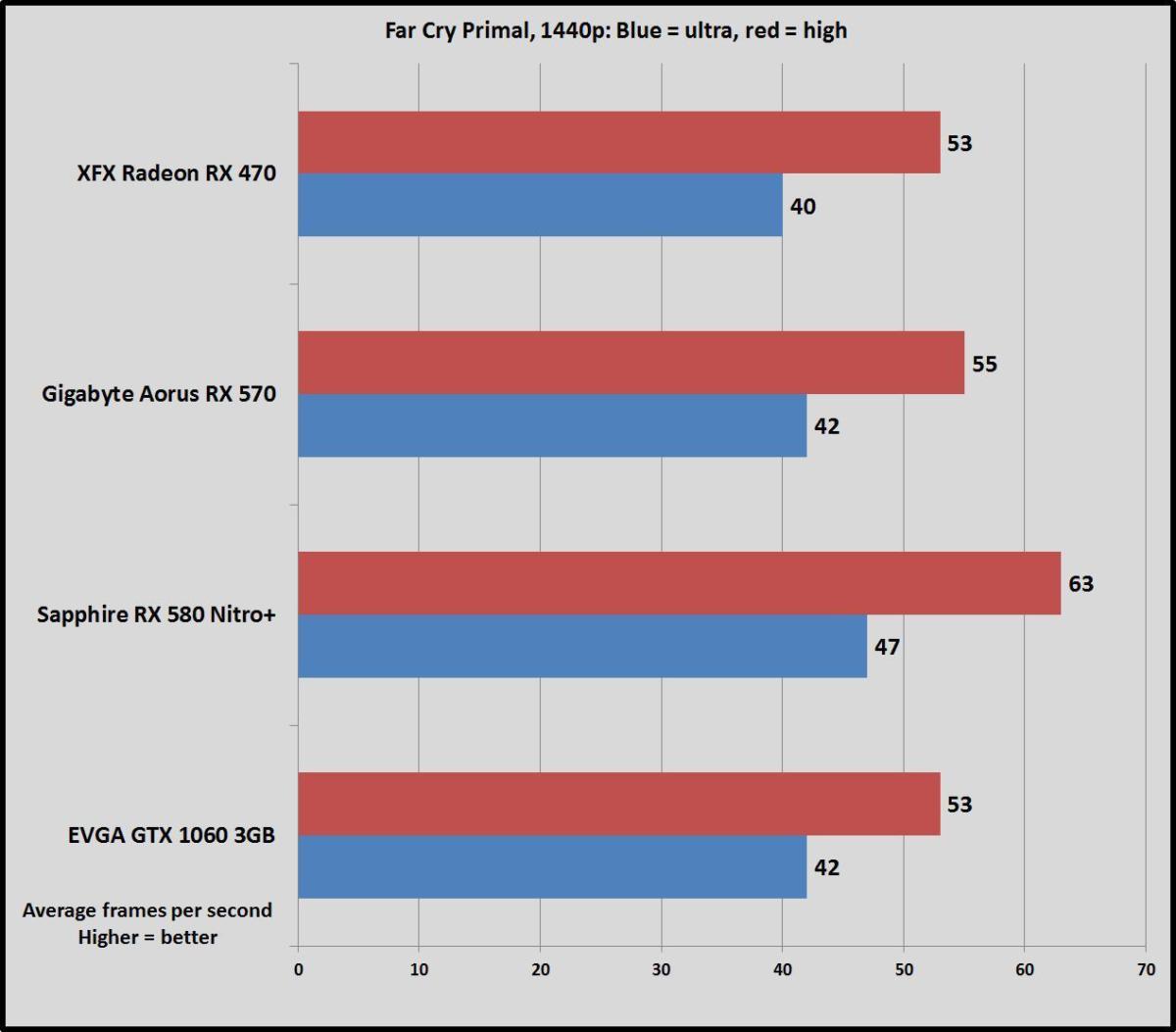
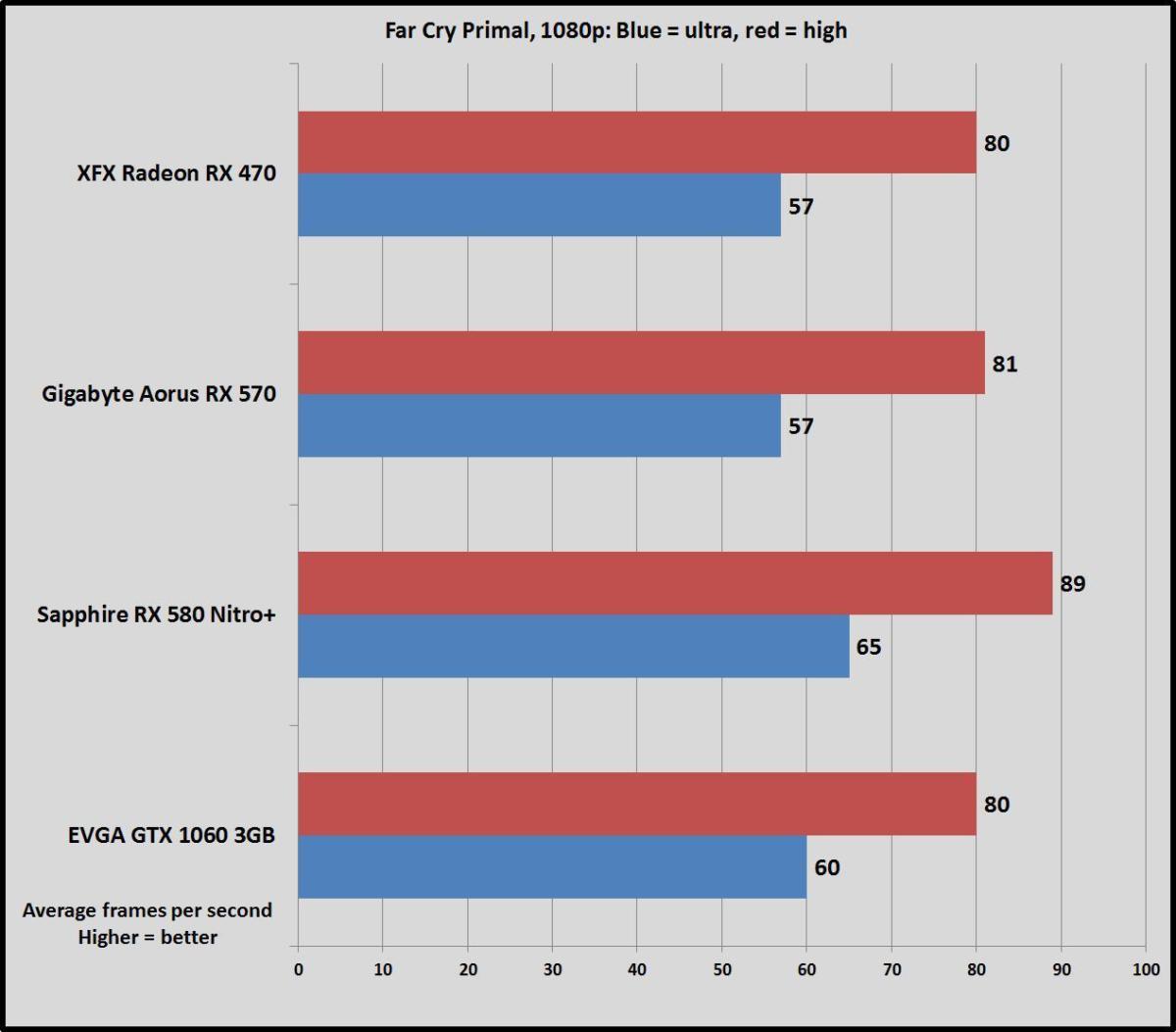
Far Scream Primaevalis heretofore another Ubisoft game, merely it's hopped-up by a different engine than The Section—the latest reading of the protracted-running and advisable-respected Dunia engine.
 Brad Chacos/IDG
  Brad Chacos/IDG
 The three budget-friendly cards trade blows yet again. In some scenarios the older RX 470 even keeps pace with the RX 570.
Ashes of the Singularity
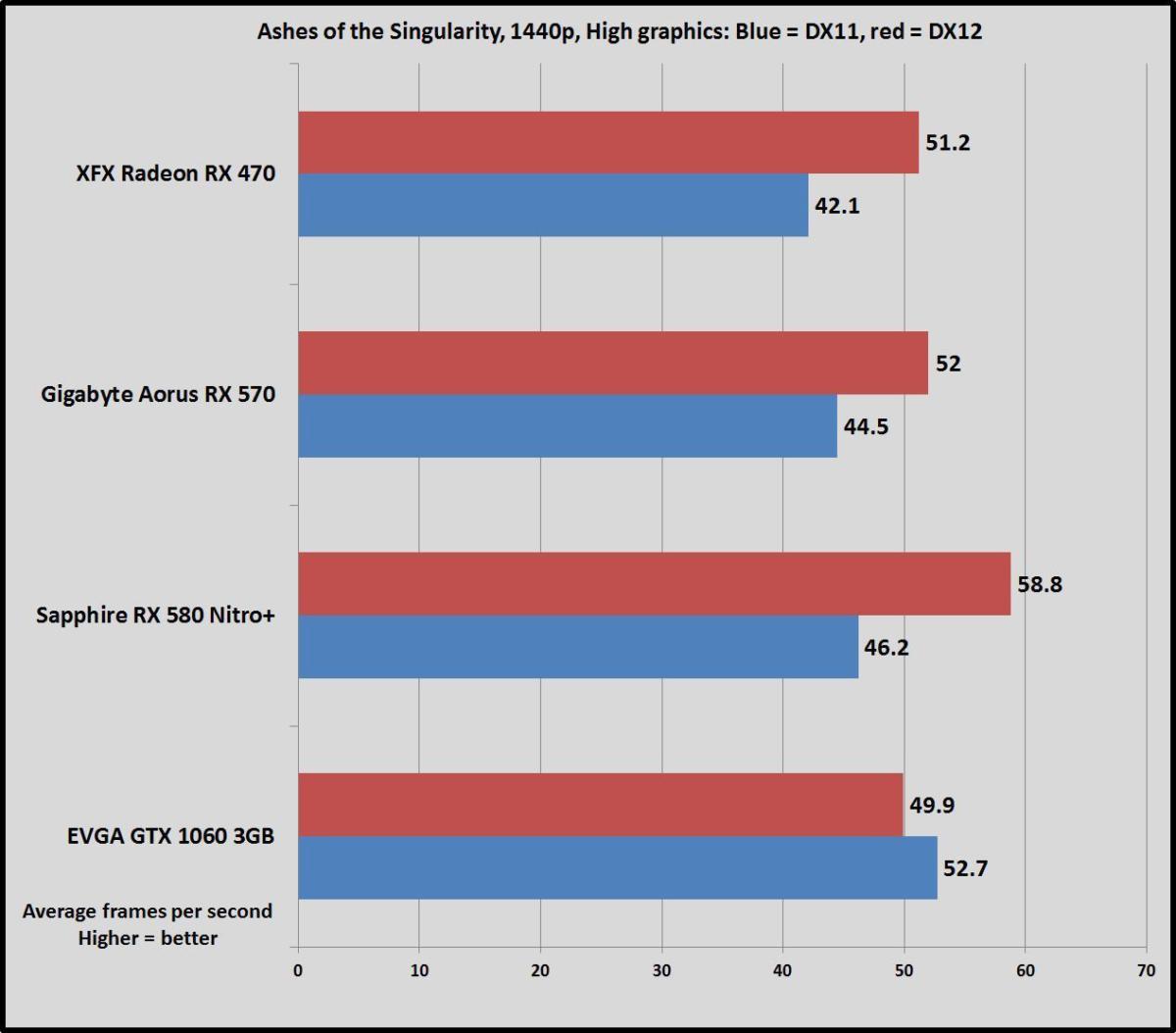
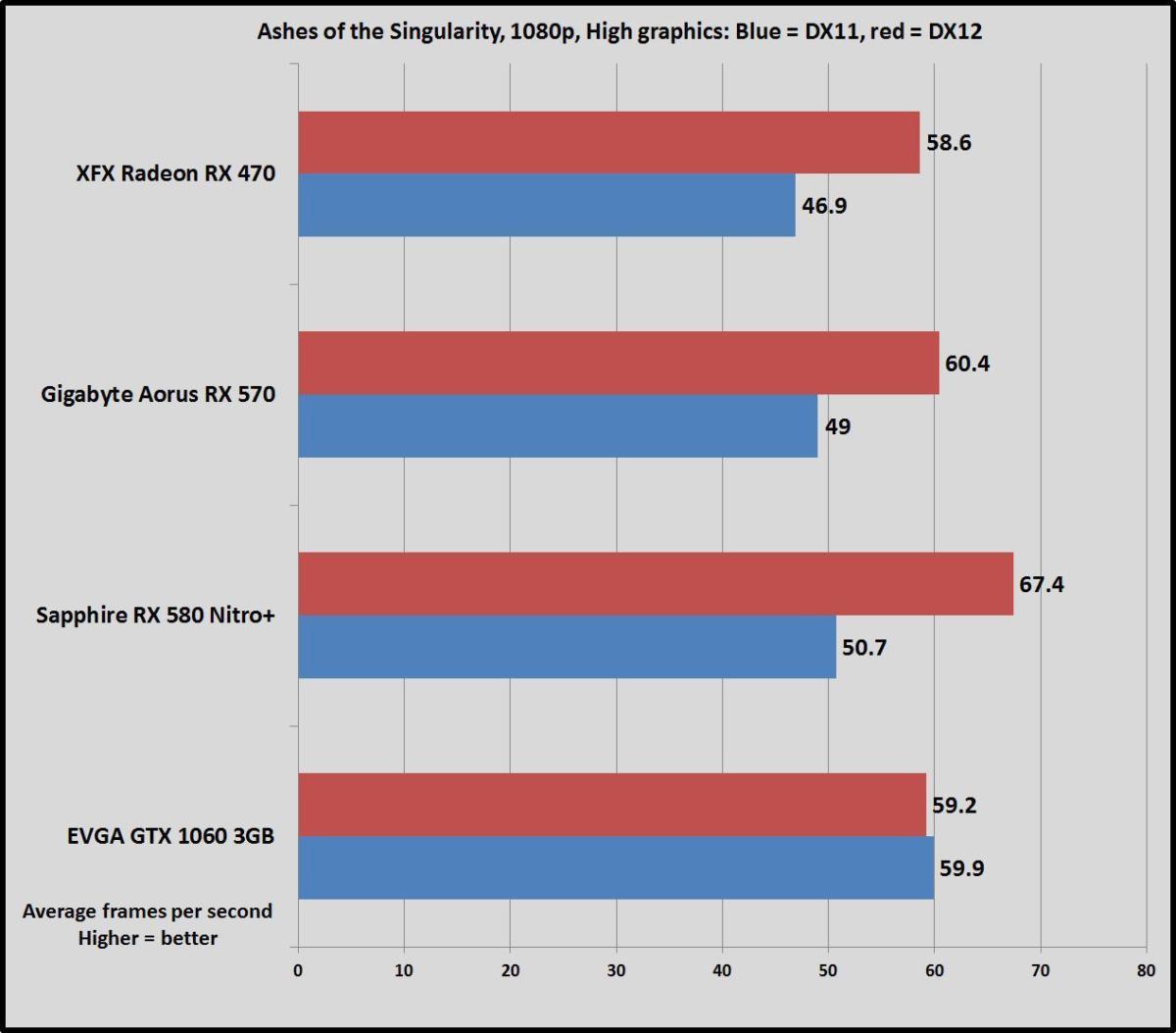
Ashes of the Singularity, running on Oxide's custom Nitrous locomotive engine, was an early standard-bearer for DirectX 12, and many months later IT'sstill the prime minister game for seeing what next-gen graphics technologies have to offer. The operation gains IT offers with DX12 over DX11 tail end live eye-orifice, though those gains tend to be more unfathomed along Radeon cards.
 Brad Chacos/IDG
  Brad Chacos/IDG
 We test the game using the High graphics setting, as the incredibly strenuous Crazy and Extreme presets aren't reflective of historical-world usage scenarios.
The patterns we've seen before play out the same here. It's essentially a dead heat between the RX 470, RX 570, and 3GB EVGA GTX 1060, comparing the GeForce card's DX11 results to the Radeon's DX12.
Synthetics, VR, power, and stir up
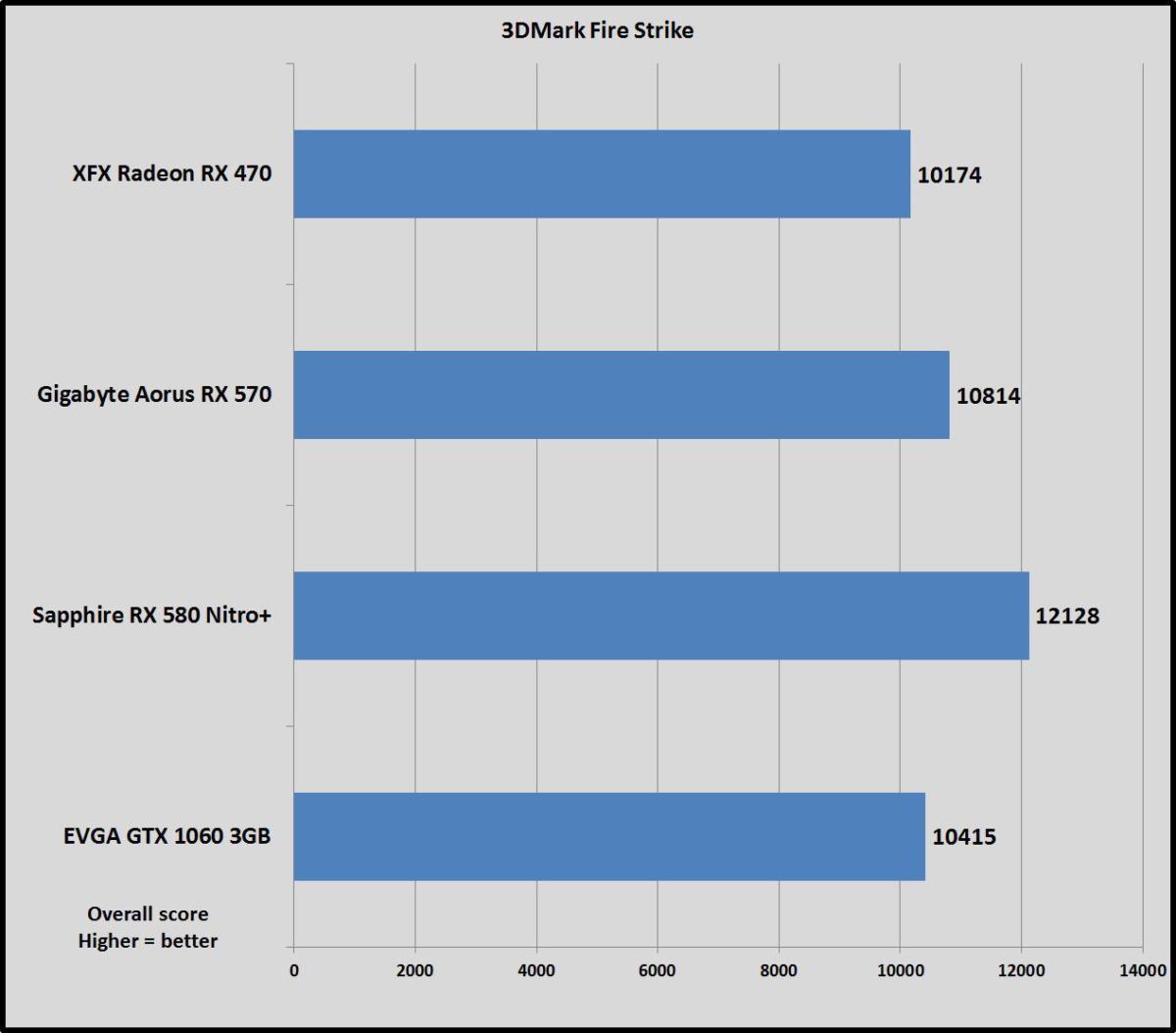
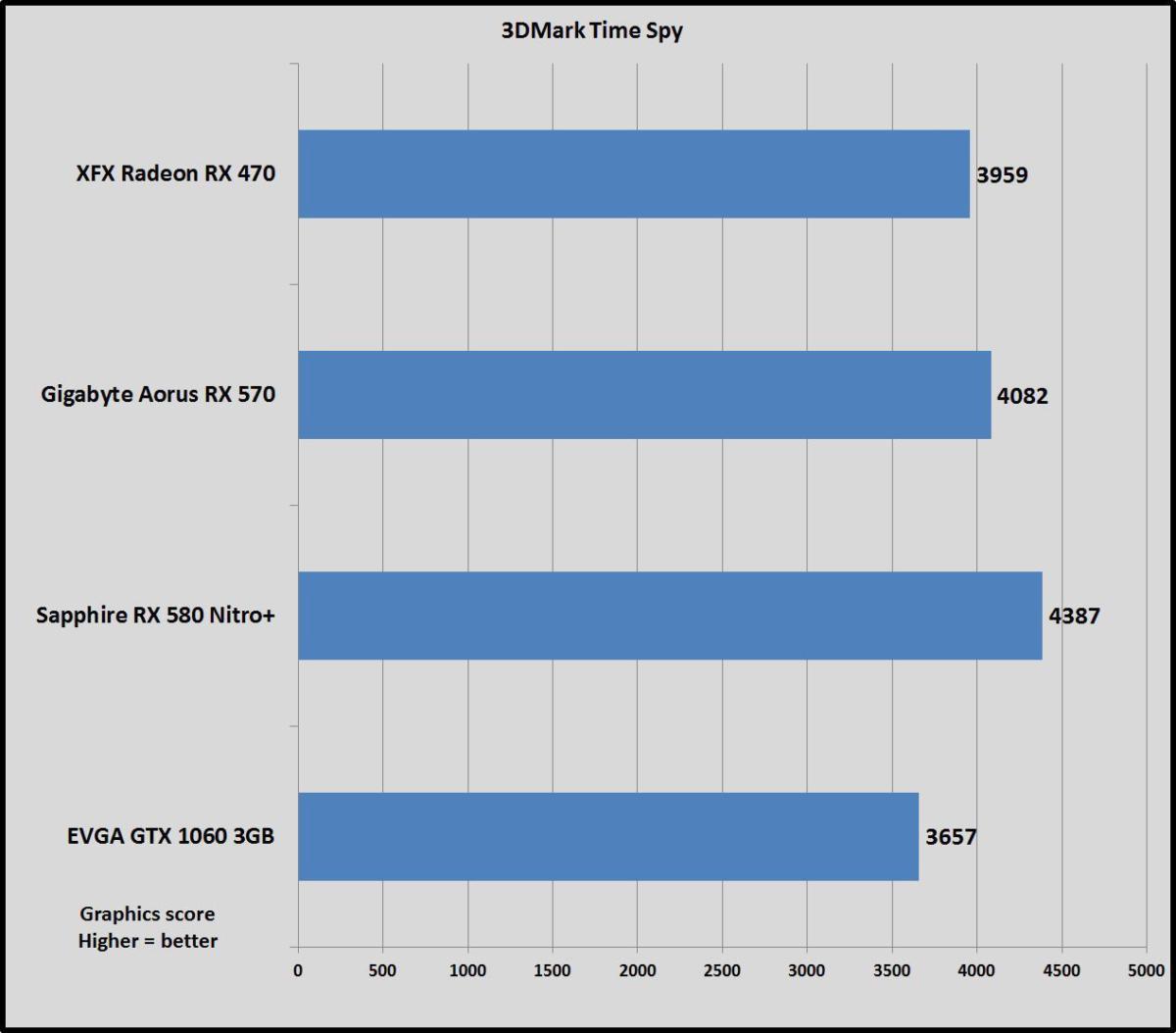
We also tested all cards victimization 3DMark's highly respected DX11 Fire Strike and Fire Strike Ultra synthetic benchmarks, as well As 3DMark's Time Spy benchmark, which measures DirectX 12 performance at 2560×1440 resolution.
 Brad Chacos/IDG
  Brad Chacos/IDG
 The Radeon cards beat extinct the GeForce card here, even though existent-world results show a much closer wash. That's why you shouldn't benchmark graphics cards using synthetic benchmarks alone.
SteamVR
 Brad Chacos/IDG
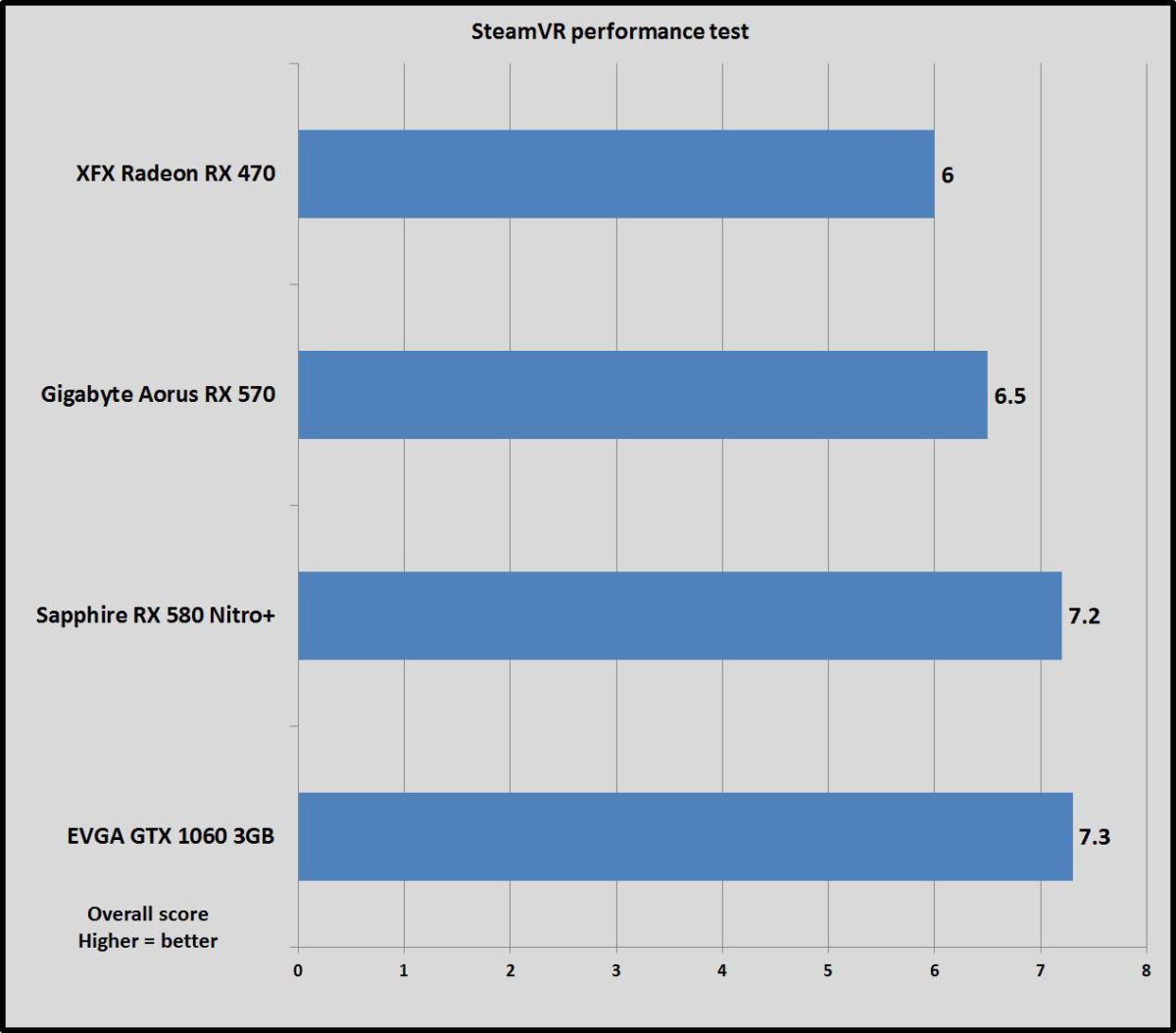
 Valve's SteamVR performance test considers all competitors waiting for usance with the HTC Vive. I'd atomic number 4 queasy about the GTX 1060's minuscule 3GB pilo for virtual reality, though, despite its ostensibly higher score. These cards should do rightful amercement with the Optic Rift as well, thanks in part to Oculus' amazing Asynchronous Spacewarp technology.
Power
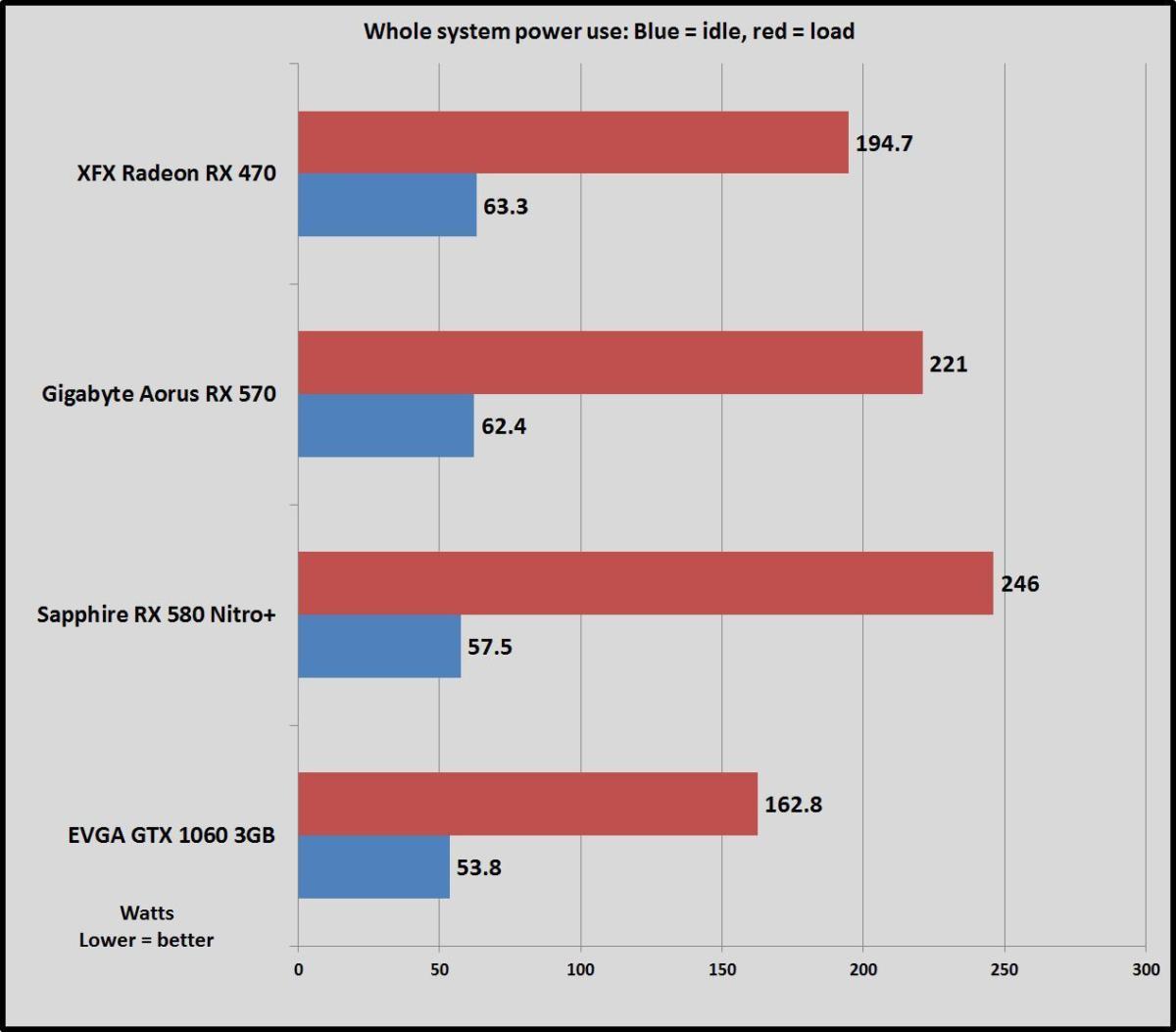
We psychometric test power under lading by plugging the total organisation into a Watts Up m, running the qualifierDivision benchmark at 4K resolution, and noting the peak power draw. Unemployed power is measured after seated on the Windows desktop for three minutes with no surplus programs OR processes running.
 Brad Chacos/IDG
 Erst more, there's no surprises here. The 3GB GTX 1060 soundless consumes significantly less power than the RX 470, while the cranked clock speeds of the RX 570 consume more power than its predecessor. AMD said the radical card game have best tycoo efficiency at idle and it shows here: The Aorus RX 570 displays slightly lower idle temps than the XFX RX 470 despite its significantly higher clock speeds.
Radeon Quiver can drastically drop the temperature and might use of AMD's artwork cards, but entirely in the 19 games that support information technology. On the plus side, those 19 games are among the most-played games in the humanity.
Heat
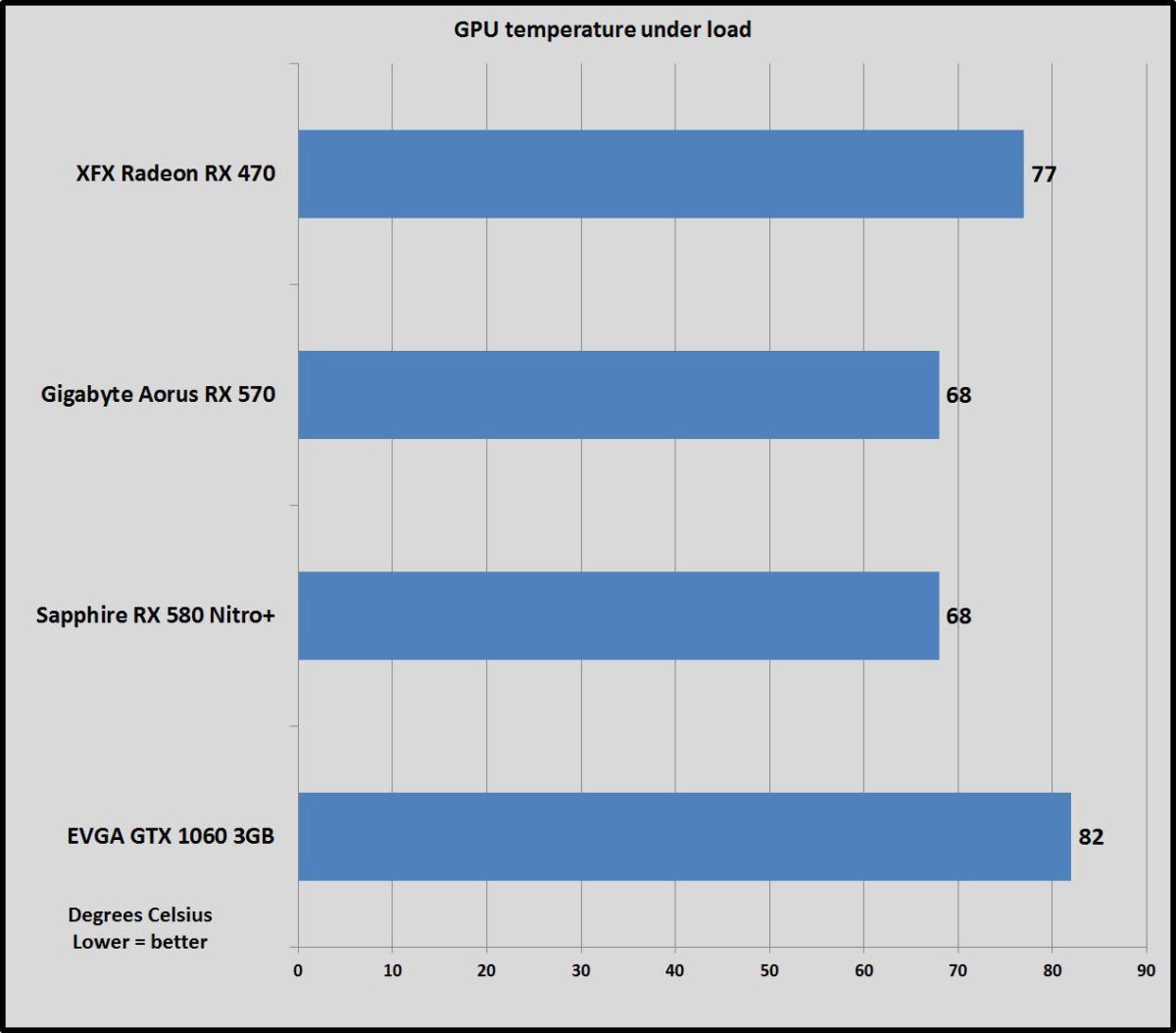
We test heat during the same intensiveDivision bench mark, by jetting SpeedFan in the background and noting the level bes GPU temperature erstwhile the run is all over.
 Brad Chacos/IDG
 The Aorus RX 570's ice chest is beefier than you typically find on sub-$200 graphics cards, and it offers the most stately temperatures, staying under 70 degrees Celsius at all times. While Nvidia's GPU doesn't need anyplace Eastern Samoa much index A the Radeon GPUs, the single-fan cooling solution agency the EVGA GTX 1060 runs toastier than its rivals—though still far from dangerously so.
Bottom line of descent
Thus there you have it: Justified with a factory overclock and an impressive custom cooler, the Aorus Radeon RX 570 is still solitary slightly faster than an overclocked Radeon RX 470, and trades blows with the 3GB GTX 1060.
It's a performance wash away—but I'd universally advocate the Radeon RX 570 over the 3GB GTX 1060 (and the so much weaker GTX 1050 Ti). Sure, the GeForce card offers much greater power efficiency, but a mere 3GB of memory capacity just doesn't cut information technology for high-level-prize gaming these years. Around games already blow past that plane at 1080p resolution, and having low 4GB of RAM can cause stuttering issues in some DirectX 12 games. The lower-cost Radeon RX 570 and its 4GB buffer is the better option, full stop.
It's a solid choice for 60-fps, 1080p gambling with few compromises, and the Aorus RX 580 can flatbottom handle some 1440p games if you don't brain dialing back graphics details and tolerating frame rates that declivity closer to 45 fps. An affordable FreeSync variable refresh rate proctor—a compelling part of Radeon's value in non-upper-end PC builds—would be a great escort for this particular card, smoothing out gameplay when performance does dip under 60 fps.
 Brad Chacos/IDG
 The $180 customized Aorus manikin is a particularly nice graphics batting order for this price segment, peculiarly since it carries only a $10 premium over AMD's recommended pricing despite its overclock and custom cooler. The $10 AMD dropped from the RX 570's suggested toll gives the GPU a much punter rate proposition with this generation, too. At $180, the elder RX 470 wasn't worthwhile when a 4GB RX 480 was only $20 more.
What a bummer of a refresh, though.
When AMD replaced the Radeon R200 series with the R300-series, those refreshed nontextual matter cards boosted memory speeds and offered more memory capacity. The Radeon RX 500-series essentially only when boosts the GPU card speeds, and it's non enough to attain any sort of meaningful execution gain in gaming scenarios. Yawn.
Equal I said, information technology makes a lot of strategic gumption for AMD to roll this rebrand. Information technology sets the level for Radeon Vega's eventual second-fourth launch, for one thing. But lots of folks are edifice new Ryzen PCs right now. Those people will have vitreous "unused" Radeon RX 500-series graphics cards to pair with their shiny newborn Ryzen 5 processors—and the Radeon RX 570 emphatically outshines its GeForce competition, ironically ascribable that untouched 4GB memory capacity. It'd live a massive whole step-heavenward finished an older Radeon R7 370 Beaver State GeForce GTX 960.
Brad Chacos/IDG Only the Radeon RX 570 is a virtually imperceptible upgrade over the Radeon RX 470. A few frames per second and advisable tycoo efficiency in some employment cases isn't persuasive whatsoever for current owners of Polaris-founded GPUs.
In fact, Radeon RX 470s receive been marketing for implausibly cheap prices in the ramp-up to this release. If you can find one of those on sale, pick it up instead and sac the surplus cash. You North Korean won't notice the performance difference. And if you're really lucky, you power even be able to find an RX 480 for roughly the same price (Oregon less!) as a custom RX 570. Get that deal all day long-handled.
Note: When you purchase something after clicking golf links in our articles, we may pull in a small commission. Read our assort link policy for more details.

Source: https://www.pcworld.com/article/406439/aorus-radeon-rx-570-review-the-best-graphics-card-you-can-buy-under-200-barely-changed.html
Posted by: mullinsanothe1939.blogspot.com
0 Response to "AMD Radeon RX 570 review: The best graphics card you can buy under $200, barely changed - mullinsanothe1939"
Post a Comment